
Imagine you’re moving through your daily routine, everything seems fine until suddenly, you’re on the ground. Slips, trips, and falls can happen to anyone, anytime.
They’re not just embarrassing; they can cause serious injuries and disrupt your life. But here’s the good news: you can prevent them. By making small changes in your environment and daily habits, you can stay safe and steady on your feet.
This guide is here to help you discover practical tips to keep you and your loved ones safe from these common hazards. Keep reading to find out how you can transform your surroundings into a safer place, ensuring peace of mind and a secure step forward.
Understanding Slip, Trip, And Fall Hazards
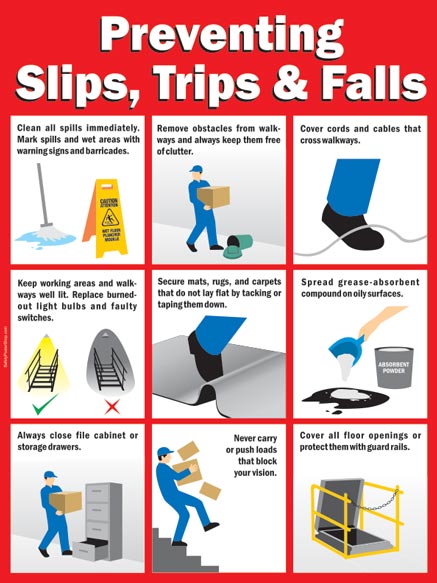
Slips, trips, and falls are common. Wet floors, uneven surfaces, or loose rugs cause slips. Trips happen when feet hit an object, like wires or toys. Falls occur from heights, like stairs or ladders. Hazards are everywhere, at home or work. Identifying these dangers is crucial for safety. Pay attention to surroundings. Look for spills or objects in walkways. Keep pathways clear and dry. Use non-slip mats in wet areas.
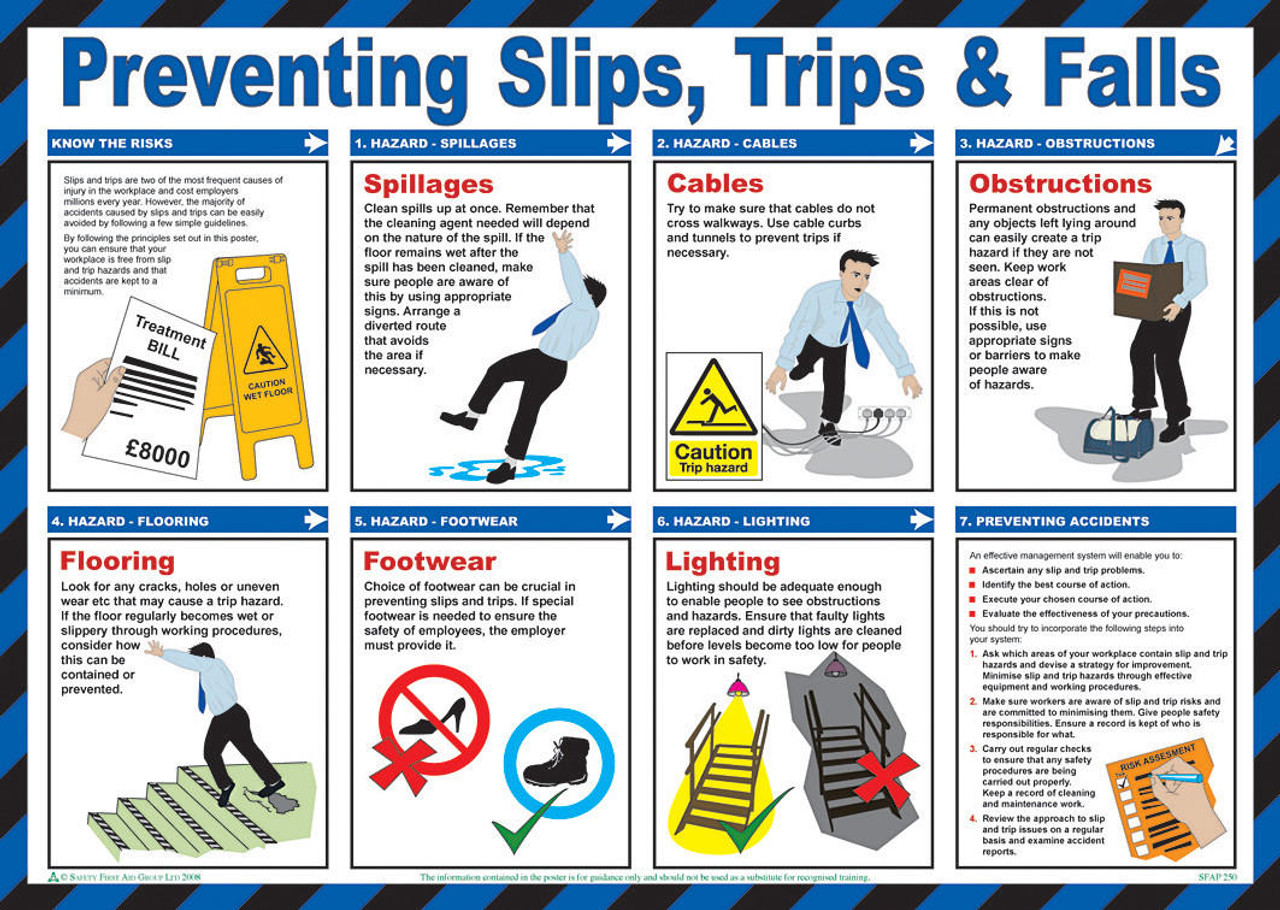
Proper footwear helps prevent slips. Shoes should have good grip. Clean shoes regularly to maintain traction. Lighting is also important. Ensure all areas are well-lit. Shadows can hide hazards. Educate family and friends. Teach kids about safety. Understanding risks reduces accidents. Simple steps can save lives.
Credit: www.safetypostershop.com
Identifying Common Risk Areas
Water on floors can cause slips. Rain makes outdoor paths slick. Spills in kitchens are dangerous. Use rugs or mats to absorb water. Place signs around wet areas. Mop up spills quickly to prevent accidents.
Items on the floor cause trips. Toys, bags, and cords are common. Keep walkways clear for safety. Organize items on shelves. Store belongings properly. Encourage everyone to pick up after themselves.
Dark areas hide hazards. People can trip over unseen objects. Install bright lights in all rooms. Use night lights in hallways. Check that all bulbs work. Replace broken bulbs promptly.
Implementing Safety Measures
Floors must be clean and dry. Dirt and debris cause slips. Water spills need quick action. Use proper cleaning tools. Regular checks help find problems. Inspections keep floors safe.
Non-slip flooring reduces falls. Choose materials with grip. Rubber mats are helpful. Install them in wet areas. Stairs need special care. Use non-slip treads on steps. Floors must stay safe.
Signs warn of wet floors. Bright colors catch the eye. Use pictures for easy understanding. Safety signs guide people. Place signs near hazards. Ensure visibility from afar. Warning signs prevent accidents.
Training And Awareness
Teach workers about slip hazards. Show them safe ways to walk. Use pictures to help them learn. Make sure they know the danger spots. Like wet floors or icy paths. Remind them to wear safe shoes. Shoes with good grip help. Keep walkways clear. Remove anything that can trip someone. Workers should always be alert. Remind them to report spills right away.
Practice safety drillsoften. Drills help workers act fast in danger. Make the drills easy to follow. Teach them where to go. Show them safe exits. Use simple words during drills. Repeat the drills regularly. This helps everyone remember. After drills, talk about what went well. Discuss any mistakes made. Always aim to do better next time.
Choosing The Right Footwear
Anti-slip shoes help prevent falls. Their rubber solesoffer great grip. The tread design is special. It reduces slipping on wet floors. Shoes with closed heelsgive more support. They help balance the body better. Materials should be water-resistant. This keeps feet dry and safe. Look for shoes with comfortable insoles. They can reduce foot pain. Proper fit is also crucial. Tight shoes can cause discomfort. Loose shoes might slip off.
Different places need different shoes. For wet areas, choose water-resistant shoes. Dry surfaces need shoes with good grip. In kitchens, non-slip shoes are ideal. They handle spills well. Outdoor workers need shoes with sturdy soles. They protect against sharp objects. Office spaces are different. Comfort is key there. Shoes should be easy to walk in. Always consider the environment before buying shoes.
Credit: risk-assessment-products.co.uk
Utilizing Safety Technology
Wearable devicescan help keep workers safe. These gadgets track movement. They send alerts for unsafe actions. Workers wear them on wrists or belts. They improve safety awarenesseach day. These devices help reduce trips and falls. They can be simple to use. Everyone can wear them easily. They are a good safety tool.
Safety appsand software are helpful. They alert users to danger zones. They can show safe paths to walk. Many apps give tips for safety. Software tracks hazards and risks. These tools help workers stay safe. They are easy to download. They work on phones and tablets. Everyone can use them quickly.
Responding To Incidents
First Aid is very important during incidents. Quick action can prevent further injuries. Start by checking if the person is conscious. Calmly talk to them. Use basic first aid techniques like applying pressure to wounds. Elevate injured limbs if possible. Call for emergency help immediately. Stay with the person until help arrives. Make sure everyone knows where the first aid kit is located. Regular training helps everyone respond better.
Reporting incidents helps improve safety. Write down what happened immediately. Include time, place, and who was involved. Details matter. Use clear language so everyone understands the report. Analyze the report to find causes. This helps prevent future incidents. Look for patterns in the reports. Share findings with everyone. Awareness can reduce risks. Regularly review and update procedures. Make safety a priority for all.
Evaluating And Improving Safety Protocols
Preventing slips, trips, and falls involves regularly checking floors for hazards. Use non-slip mats in wet areas. Install bright lighting to ensure visibility.
Regular Safety Audits
Safety audits help find risks early. Regular checks make sure everything is safe. These audits look at floors, stairs, and lighting. Trained staff should do these audits. They know what to look for. Make a list of problems found. Fix them fast. Feedback from workers is key. They help spot unseen risks.
Updating Policies And Procedures
Policies need updates often. New rules keep everyone safe. Old rules may miss new risks. Review policies every year. Make sure they fit new laws. Procedures should be clear. Everyone should know them. Use simple language in rules. Train staff on changes. Post updates where everyone sees them. Clear signs help remind people.

Credit: www.statefoodsafety.com
Frequently Asked Questions
What Causes Slips, Trips, And Falls?
Slips, trips, and falls often result from wet surfaces, uneven flooring, and cluttered spaces. Poor lighting and improper footwear can also increase risks. Regular maintenance and vigilant housekeeping can mitigate these hazards effectively.
How Can I Improve Floor Safety?
Enhance floor safety by regularly cleaning and maintaining surfaces. Use slip-resistant mats in high-risk areas. Ensure that all walkways are well-lit. Keep floors free from clutter and spills to prevent accidents.
What Footwear Is Best To Prevent Falls?
Footwear with non-slip soles is ideal for preventing falls. Choose shoes that fit well and provide good support. Avoid wearing high heels on slippery surfaces. Regularly check footwear for wear and tear to ensure safety.
Are Handrails Effective In Preventing Falls?
Yes, handrails provide support and stability, reducing fall risks. Install handrails on stairs and ramps. Ensure they are sturdy and at an appropriate height. Regularly inspect and maintain them to ensure continued safety.
Conclusion
Preventing slips, trips, and falls is essential for safety. Simple actions can save lives. Keep floors clean and dry. Use non-slip mats in wet areas. Organize cords and clutter. Good lighting helps visibility. Wear shoes with grip. Regularly check for hazards.
Everyone should stay alert and aware. Make safety a daily habit. Encourage others to follow these tips too. Small changes make a big difference. Your safety is worth the effort. Stay safe and protect yourself. Remember, prevention is key. Take action today for a safer tomorrow.
Safety first, always.