
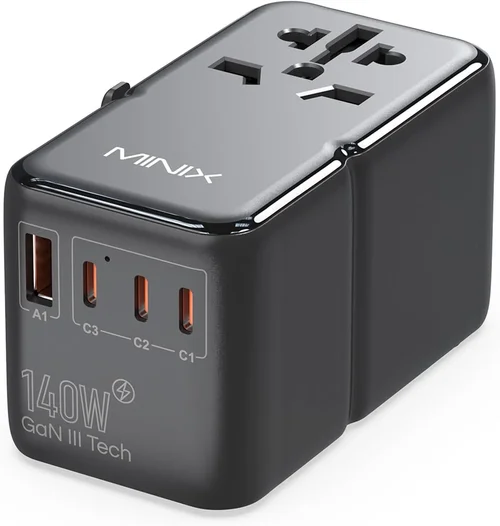
In our increasingly connected world, where smartphones are our cameras, navigators, and communication hubs, and laptops are our mobile offices, the fear of a dead battery is a modern-day nightmare. Imagine being on a crucial video call, navigating an unfamiliar city, or trying to capture a once-in-a-lifetime moment, only for your device to unexpectedly power down. This all-too-common scenario underscores the indispensable role of a reliable portable power bank.
As we look ahead to 2026, the technology landscape for portable power is evolving at an incredible pace. What was once a simple battery brick has transformed into a sophisticated gadget, integrating advanced charging protocols, smarter safety features, and increasingly compact designs. This guide is your essential companion through this exciting and sometimes overwhelming market. We’re here to help you cut through the noise, understand the jargon, and identify the power bank that perfectly aligns with your lifestyle and technological demands.
By the end of this comprehensive, expert-level guide, you’ll be equipped with all the knowledge needed to make an informed decision. We’ll delve into critical specifications, compare different types, reveal common purchasing pitfalls, and share expert tips to ensure you invest in a power bank that’s not just powerful, but truly smart and future-proof. Get ready to banish battery anxiety forever and confidently navigate the world of portable power in 2026.

What to Look for When Buying Buying Guide
Choosing the right portable power bank can feel like a daunting task with countless options available. To simplify this process, let’s break down the most crucial factors you should consider. Understanding these elements will empower you to make an intelligent, long-lasting investment.
1. Capacity (mAh/Wh)
The capacity of a portable power bank is arguably its most fundamental specification, dictating how many times it can recharge your devices. Measured in milliampere-hours (mAh) for smaller devices or watt-hours (Wh) for larger ones like laptops, it tells you the sheer volume of power stored within.
When you see “10,000mAh,” for instance, it means the power bank can theoretically deliver 10,000 milliamperes for one hour. However, real-world efficiency losses typically mean you won’t get 100% of that capacity delivered to your device. For context, a modern smartphone might have a battery capacity of 4,000-5,000mAh. A 10,000mAh power bank could fully recharge it twice, maybe even three times depending on the phone’s battery size and the power bank’s efficiency. Laptop batteries, on the other hand, are often in the 50-100Wh range, requiring much larger power banks (20,000mAh or more, often specified in Wh for clarity) to provide significant charges.
Consider your primary use case: if you just need a quick top-up for your phone during the day, a compact 5,000-10,000mAh unit might suffice. For weekend trips, extended travel, or powering multiple devices like a tablet and phone, a 20,000mAh power bank is a common sweet spot. For serious travelers, photographers, or those who frequently use laptops on the go, a 27,000mAh (99.9Wh, the common airline limit) or even larger capacity is essential. Balance the need for ample power against the desire for portability, as higher capacity invariably means greater size and weight.
2. Charging Speed (Input/Output Watts, PD/QC)
In 2026, charging speed is paramount, and it’s determined by the wattage (W) a power bank can output and input. Don’t settle for slow charging when you don’t have to. The key technologies to look for are Power Delivery (PD) and Quick Charge (QC).
- Power Delivery (PD): This has become the universal standard for fast charging across a wide range of devices, from smartphones and tablets to laptops. In 2026, PD 3.1 is the latest iteration, capable of delivering up to 240W, though most consumer-grade power banks will offer 45W, 65W, 100W, or even 140W via USB-C. A power bank with at least 45W PD output can fast-charge most modern smartphones and smaller laptops, while 65W and above are ideal for larger laptops and faster multi-device charging.
- Quick Charge (QC): While PD is becoming dominant, QC (now at QC 5.0) remains relevant, primarily for Android devices and specific peripherals. Many power banks offer both PD and QC compatibility for broader versatility.
Crucially, consider both output charging speed (how fast it charges your devices) and input charging speed (how fast the power bank itself recharges). A power bank that can output 65W PD but only recharges at 18W will take hours to fill up. Look for power banks that support fast input charging, ideally matching its output capability, so you’re not waiting all day for the power bank to be ready for its next adventure.
3. Port Selection & Versatility
The types and number of ports on a power bank dictate its compatibility and versatility. In 2026, USB-C is king, but other ports still have their place.
- USB-C Ports: Essential for both input and output charging, especially with PD 3.1 capabilities. Look for multiple USB-C ports if you plan to charge several modern devices simultaneously. Some advanced power banks might feature a dedicated high-wattage USB-C port for laptops and another for general device charging.
- USB-A Ports: Still useful for older accessories, smartwatches, fitness trackers, or as a fallback. Ensure any USB-A ports support some form of fast charging (e.g., QC 3.0 or proprietary protocols).
- Wireless Charging: Many power banks now integrate Qi wireless charging pads, offering convenient cable-free power for compatible phones, earbuds, and even some smartwatches. For iPhone users, MagSafe compatibility in 2026 power banks offers secure magnetic alignment and faster wireless charging.
- DC Output: Some high-capacity power banks designed for laptops or specialized equipment may include a DC output port, often with adjustable voltage, for broader compatibility with various laptop models that don’t primarily charge via USB-C.
- AC Outlet: For the ultimate versatility, some robust power stations (often larger than typical power banks) include a standard AC outlet, allowing you to power small appliances, fans, or traditional laptop chargers directly.
The ideal power bank will offer a combination of ports that matches your device ecosystem, allowing you to charge everything you carry efficiently and simultaneously.
4. Build Quality & Durability
A portable power bank is an investment that should withstand the rigors of daily use and travel. Don’t underestimate the importance of robust construction. Premium power banks often feature durable materials like aircraft-grade aluminum or high-grade polycarbonate that can resist scratches, minor impacts, and everyday wear and tear. Pay attention to the fit and finish – a well-built power bank will feel solid and have no creaky parts.
Consider features like reinforced ports, which prevent damage from frequent plugging and unplugging, and good heat dissipation, crucial for maintaining performance and battery longevity during fast charging. For outdoor enthusiasts or those in demanding environments, look for power banks with specific durability enhancements, such as IP ratings for water and dust resistance. While a fully waterproof power bank might be overkill for most, a splash-resistant one offers peace of mind.
5. Safety Features & Certifications
This is a non-negotiable factor. A portable power bank contains powerful lithium-ion or lithium-polymer batteries, and without proper safety mechanisms, they can pose risks. Reputable brands integrate multiple layers of protection to safeguard both the power bank and your connected devices. Essential safety features include:
- Overcharge Protection: Prevents the battery from being charged beyond its safe capacity.
- Over-discharge Protection: Stops the battery from draining too low, which can damage its cells.
- Short-circuit Protection: Automatically shuts down power if a short circuit is detected.
- Over-voltage Protection: Protects against excessive voltage input.
- Over-current Protection: Guards against excessive current output.
- Temperature Control: Monitors the battery’s temperature to prevent overheating during charging or discharging.
Beyond these internal safeguards, look for international certifications such as UL (Underwriters Laboratories), CE (Conformité Européenne), FCC (Federal Communications Commission), and RoHS (Restriction of Hazardous Substances). These certifications indicate that the product has met stringent safety and environmental standards, giving you confidence in its reliability and safety.
6. Size, Weight & Portability
The “portable” in portable power bank is key, and its practicality often hinges on its physical dimensions and weight. There’s a direct trade-off between capacity and portability: higher capacity generally means a larger, heavier device. The best power bank for you strikes a balance that fits your lifestyle.
- Pocket-sized: Typically 5,000-10,000mAh, these are lightweight and can easily slip into a pocket or small bag. Ideal for daily commutes or quick phone top-ups.
- Mid-sized: Ranging from 10,000-20,000mAh, these offer a good balance of power and portability. They’re suitable for backpacks, purses, or briefcases, providing enough juice for multiple device charges during a day or weekend.
- High-capacity/Laptop chargers: Often 20,000mAh and above, these can be substantial in size and weight, sometimes resembling a small brick. While less convenient for daily pocket carry, they are indispensable for long trips, outdoor adventures, or powering laptops.
Consider the form factor: some are sleek and thin, others more chunky. If you travel by air, remember that power banks are restricted to carry-on luggage, and there are limits to their capacity. Most airlines permit power banks up to 100Wh (approximately 27,000mAh) without prior approval, with some allowing up to 160Wh with airline consent. Always check current regulations before flying, as policies can change.
7. Smart Features & Ecosystem Integration
In 2026, power banks are no longer just dumb batteries. Smart features can significantly enhance their utility and user experience.
- Digital Displays: A clear LED or LCD screen showing remaining battery percentage, charging voltage, and current wattage output is incredibly useful. This eliminates guesswork and helps you monitor performance.
- Pass-Through Charging: This feature allows the power bank to charge itself while simultaneously charging connected devices. It’s convenient for single-outlet situations, ensuring both your devices and the power bank are ready when you unplug.
- Low-Power Mode: Essential for charging delicate devices like smartwatches, earbuds, or fitness trackers that require a very low current. Without this mode, some power banks might automatically shut off, thinking the device is fully charged or disconnected.
- Companion Apps: Some premium power banks in 2026 might offer companion smartphone apps for advanced monitoring, firmware updates, or even scheduling charging times.
- IoT Integration: While still nascent for power banks, future models might integrate with smart home ecosystems or offer features like location tracking.
These smart additions transform a basic necessity into a sophisticated tool, making your charging experience more efficient and informed.
8. Brand Reputation & Warranty
Just as with any electronic device, the brand behind your portable power bank matters. A reputable brand often signifies adherence to quality manufacturing standards, reliable performance, and robust safety protocols. Established companies typically invest more in research and development, utilize higher-quality battery cells, and provide better customer support.
Look for brands known for their power solutions, consumer electronics, or battery technology. While a lesser-known brand might offer a tempting price, the potential risks of poor performance, short lifespan, or even safety hazards often outweigh the initial savings. Scrutinize user reviews for consistent themes regarding product reliability, customer service responsiveness, and warranty claims.
Equally important is the warranty and support offered. A good warranty, typically 12-24 months, indicates the manufacturer’s confidence in their product. Understand the terms of the warranty, including what it covers and the process for making a claim. Excellent customer support can be invaluable if you encounter any issues, ensuring you have assistance when you need it most.
Different Types of Buying Guide

Common Buying Mistakes to Avoid
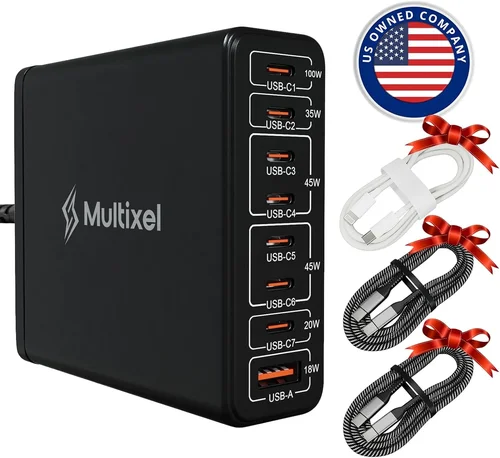
Even with all the right information, it’s easy to fall into common traps when purchasing a portable power bank. Being aware of these pitfalls can save you money, frustration, and ensure you get a product that truly meets your needs.
❌ Mistake: Ignoring Actual Power Needs
Why it’s bad: Many buyers either overestimate or underestimate the capacity they truly need. Buying a massive 27,000mAh power bank for occasional phone top-ups is overkill; it’s bulky, heavy, and more expensive than necessary. Conversely, picking a small 5,000mAh unit to power a laptop or for a week-long camping trip will leave you stranded and frustrated.
What to do instead: Assess your typical usage. How many devices do you need to charge? What are their battery capacities? How often do you need to recharge them? A simple calculation: (Device mAh) x (Number of Charges Needed) / (Power Bank Efficiency, usually 0.8-0.9) will give you a rough idea of the ideal power bank capacity. For laptops, focus on Wh and matching the laptop’s charging wattage.
❌ Mistake: Prioritizing Price Over Quality
Why it’s bad: The market is flooded with incredibly cheap power banks, often from unknown brands. While the low price is tempting, these units frequently use low-quality battery cells, lack essential safety features, have exaggerated capacity claims, and offer inconsistent performance. They can be unreliable, have a short lifespan, and in worst-case scenarios, pose fire hazards due to inadequate safety circuits.
What to do instead: Invest in a reputable brand with a proven track record. While it might cost a bit more upfront, you’ll get genuine capacity, consistent output, multiple safety protections, and a reliable device that lasts. Think of it as investing in peace of mind.
❌ Mistake: Overlooking Input Charging Speed
Why it’s bad: You might buy a power bank that charges your phone at warp speed, but then discover it takes 10-12 hours to recharge the power bank itself. This can be a huge inconvenience, especially when you need to quickly prepare for another outing or a flight.
What to do instead: Always check the power bank’s input wattage. Look for units that support fast input charging (e.g., 30W, 45W, or even 65W PD input via USB-C). This ensures your power bank is ready to go when you are, dramatically reducing downtime.
❌ Mistake: Disregarding Port Compatibility
Why it’s bad: You buy a shiny new power bank, only to find it doesn’t have the right ports for your specific devices, or it only has USB-A when all your new gadgets use USB-C. This often means carrying extra adapters or incompatible cables, defeating the purpose of convenient portable power.
What to do instead: List all the devices you intend to charge with the power bank. Check their charging port types (USB-C, USB-A, Lightning, etc.) and their preferred charging protocols (PD, QC). Choose a power bank that offers a versatile mix of ports and charging standards to accommodate your entire tech ecosystem.
❌ Mistake: Forgetting About Airline Restrictions
Why it’s bad: Planning an international trip with a massive power bank only to have it confiscated at security or being denied boarding because it exceeds carry-on limits is a traveler’s nightmare. High-capacity power banks can pose a safety risk in cargo holds, leading to strict regulations.
What to do instead: Always verify your power bank’s capacity in Watt-hours (Wh). Most airlines allow up to 100Wh (approximately 27,000mAh for a 3.7V battery) in carry-on luggage without special permission. Some allow up to 160Wh with airline approval. Plan accordingly, and never pack power banks in checked luggage.
❌ Mistake: Neglecting Safety Features and Certifications
Why it’s bad: As mentioned, lithium-ion batteries can be dangerous without proper internal protection. Purchasing a power bank without multiple safety features (overcharge, over-discharge, short-circuit, temperature protection) or recognized safety certifications puts your devices, your property, and your personal safety at risk. Inferior power banks can overheat, swell, or even ignite.
What to do instead: Always check for a comprehensive suite of safety features listed in the product description. Prioritize power banks with international safety certifications like UL, CE, FCC, and RoHS. These are not just labels; they represent rigorous testing and adherence to safety standards.
❌ Mistake: Believing Exaggerated Claims
Why it’s bad: Some unscrupulous manufacturers make outrageous claims about capacity, charging speed, or durability that simply aren’t true. A 50,000mAh power bank for $30, or one claiming to charge a laptop from 0-100% in 15 minutes, is highly suspicious. These exaggerated claims are designed to mislead and can lead to significant disappointment when the product fails to deliver.
What to do instead: Be a skeptical consumer. If a deal seems too good to be true, it probably is. Research common capacities and charging speeds for established brands. Read detailed reviews from trusted sources and cross-reference specifications. Educate yourself on realistic expectations for power bank performance in 2026.
Budget Guidelines: How Much Should You Spend?
The price of a portable power bank can range dramatically, from under $20 to several hundred dollars. Understanding what you get at each price point will help you budget effectively and avoid overspending or underspending on a device that doesn’t meet your needs.
Entry-Level ($20 – $50): What to Expect
In this budget bracket, you’ll typically find compact power banks with capacities ranging from 5,000mAh to 10,000mAh. These are usually basic models, offering standard USB-A outputs and perhaps one USB-C port with modest Power Delivery (PD) or Quick Charge (QC) capabilities (e.g., 18W-20W). Build quality is usually decent, often made of plastic, and they include fundamental safety features. They are perfect for those who need to occasionally top up a smartphone or charge smaller accessories like earbuds. Don’t expect to charge laptops or multiple devices quickly at this price point.
Best for: Students, daily commuters, casual users needing emergency phone power.
Mid-Range ($50 – $120): Sweet Spot for Most Buyers
This is where the majority of consumers will find the best balance of features, performance, and value. Mid-range power banks typically offer capacities from 10,000mAh up to 20,000mAh. You’ll see significantly faster charging speeds here, with robust PD (e.g., 30W-65W) via USB-C, enabling rapid charging for most smartphones, tablets, and even some smaller laptops. Many models will include multiple ports (USB-A and USB-C), often with wireless charging capabilities and improved build quality, sometimes featuring aluminum casing. You can also expect more advanced safety features and reputable brand names in this category.
Best for: Travelers, professionals, power users with multiple devices, those seeking a versatile everyday power solution.
Premium ($120 – $250): For Enthusiasts and Professionals
Stepping into the premium segment brings substantial power, advanced technology, and often superior durability. Capacities here typically range from 20,000mAh to 27,000mAh (the common airline limit of 99.9Wh). These power banks boast very high Power Delivery outputs, frequently 65W, 100W, or even 140W (with PD 3.1), making them ideal for charging high-performance laptops, professional cameras, and multiple devices simultaneously at full speed. Expect features like multiple high-wattage USB-C ports, integrated smart displays, premium GaN technology for efficiency, and exceptional build quality. Some might even offer specialized DC outputs or enhanced ruggedness.
Best for: Digital nomads, photographers, remote workers, heavy laptop users, and anyone needing uncompromising power and reliability on the go.
Luxury ($250+): Top-Tier Features and Specialized Needs
At the top end, you’ll find specialized power banks or portable power stations designed for extreme use cases. Capacities can exceed 27,000mAh (though these are often limited for air travel or require special permits) and might feature AC outlets, solar charging input, and extremely high wattage outputs (up to 240W PD 3.1). These devices are built for maximum versatility and durability, often with ruggedized, weather-resistant designs. They are overkill for most users but are indispensable for specific professionals or enthusiasts.
Best for: Expedition leaders, serious outdoor adventurers, event organizers, those needing to power small appliances or tools off-grid.

Expert Tips for Getting the Best Deal
Navigating the power bank market can be a bit of a maze, but armed with the right strategies, you can snag an excellent deal without compromising on quality or features. Here’s some insider advice to help you make a smart purchase.
1. Timing Your Purchase: Ride the Sales Waves
Just like many electronics, portable power banks see significant discounts during major retail events. Keep an eye out for sales around Black Friday, Cyber Monday, Prime Day, and other seasonal holiday sales (e.g., back-to-school, Memorial Day). Manufacturers often release new models throughout the year, so older, still highly capable models might see price drops to clear inventory. If you’re not in an immediate rush, waiting for these sales can save you a substantial amount.
2. Compare Retailers: Don’t Settle for the First Price
Never buy from the first retailer you check. Prices for the exact same model can vary significantly across different online stores (Amazon, Best Buy, B&H Photo, manufacturer’s direct site) and brick-and-mortar locations. Use price comparison websites or browser extensions to quickly scan for the best current offer. Also, check if a retailer offers price matching, which can save you the hassle of ordering from multiple places.
3. Read the Fine Print: Beyond the Headlines
The headline features (e.g., “100W PD!”) are great, but the devil is in the details. Dig into the product specifications sheet to confirm actual output for each port, input charging speed, and specific features like pass-through charging or low-power mode. Verify battery cell type (Li-ion vs. Li-Po) and safety certifications. A high “peak” wattage might only be available on one port, or under specific conditions. Understanding these nuances prevents disappointment.
4. Understand Wh vs. mAh for Travel
If you fly frequently, internalize the difference between Watt-hours (Wh) and milliampere-hours (mAh). Airlines use Wh for their restrictions (typically 100Wh max in carry-on without approval). Many power banks only list mAh. To convert: (mAh V) / 1000 = Wh. Assume 3.7V for most power banks. For example, a 27,000mAh power bank is roughly (27000 3.7) / 1000 = 99.9Wh. This calculation is crucial for hassle-free air travel.
5. Invest in Quality Cables: The Unsung Heroes
Your power bank might be a 140W PD beast, but if you’re using a cheap, old, or incompatible cable, you won’t get anywhere near those speeds. Fast charging requires cables specifically rated for high wattage and data transfer. For USB-C PD, look for “USB-C to USB-C” cables rated for 60W, 100W, or even 240W, often designated as “E-marker” cables. A poor cable can be a significant bottleneck, making your powerful power bank perform like a basic one.
6. Consider Future Needs: Expand Your Horizons
Technology evolves rapidly. While you might only need to charge your phone now, think about what devices you might acquire in the next 1-2 years. Will you get a new laptop that requires higher wattage? New earbuds with wireless charging? Opting for a slightly more capable power bank today (e.g., one with higher PD wattage or a wireless charging pad) can future-proof your investment and save you from needing to buy another one sooner.
7. Verify Certifications and Read Long-Term Reviews
Beyond initial impressions, how does a power bank perform after six months or a year? Look for reviews that discuss long-term durability, battery degradation, and customer service experiences. Additionally, always confirm the presence of safety certifications like UL, CE, and FCC. These aren’t just badges; they represent critical testing and adherence to safety standards, especially for a device containing high-capacity batteries.
8. Check Return Policies and Warranty
Before finalizing your purchase, understand the retailer’s return policy and the manufacturer’s warranty. A solid 12-24 month warranty is a good indicator of product confidence. Knowing you can return or replace a faulty unit offers significant peace of mind, especially with electronics. Keep your receipt and original packaging.

Frequently Asked Questions
Q: What is the ideal capacity for a power bank?
A: The “ideal” capacity depends entirely on your needs. For daily phone top-ups, 5,000-10,000mAh is sufficient. For weekend trips or charging multiple devices, 15,000-20,000mAh is a good general-purpose choice. If you need to charge a laptop or for extended off-grid use, look for 25,000mAh (99.9Wh) or higher, with appropriate wattage output. Remember to factor in a 10-20% efficiency loss for real-world use.
Q: Is it safe to use a power bank from any brand?
A: No, it is not. While many reputable brands produce safe and reliable power banks, the market is also flooded with low-quality, uncertified products. These can pose significant safety risks, including overheating, swelling, or even fire. Always choose power banks from established brands with a strong reputation for quality and safety, and look for international safety certifications (UL, CE, FCC).
Q: How often should I charge my power bank to maintain its battery health?
A: For optimal battery health, it’s best to keep your power bank charged between 50% and 80% when not in use for extended periods. Avoid letting it completely drain to 0% frequently, and try not to keep it at 100% charge constantly. If you’re storing it for a long time, charge it to about 50-60% and then check it every few months, recharging if it drops significantly.
Q: Can I take any power bank on an airplane?
A: No. Power banks (and all spare lithium batteries) are only allowed in carry-on luggage, never in checked baggage, due to fire risk. Most airlines permit power banks with a capacity of up to 100 Watt-hours (Wh) without special approval. Power banks between 101Wh and 160Wh usually require airline approval. Power banks exceeding 160Wh are generally forbidden. Always convert your power bank’s mAh to Wh (mAh * V / 1000 = Wh; assume 3.7V if not specified) and check with your airline before flying.
Q: What’s the difference between Power Delivery (PD) and Quick Charge (QC)?
A: Both are fast-charging technologies. Power Delivery (PD) is an open, universal standard primarily over USB-C that negotiates power output (voltage and current) to match the device’s needs, supporting up to 240W with PD 3.1. It’s widely adopted by Apple, Android, and laptop manufacturers. Quick Charge (QC) is Qualcomm’s proprietary fast-charging technology, primarily found on Android devices using Qualcomm chipsets. While still prevalent, PD is becoming the more dominant and universal standard for high-wattage charging in 2026.
Q: Do power banks lose charge over time when not in use?
A: Yes, all batteries, including those in power banks, experience a phenomenon called “self-discharge.” This means they will gradually lose charge even when not in use. The rate of self-discharge varies by battery chemistry and quality, but you can expect a power bank to lose a few percentage points of charge per month. Higher quality power banks with better battery management systems tend to have lower self-discharge rates.
Q: Can I charge a laptop with a portable power bank?
A: Absolutely, yes, provided the power bank has sufficient capacity and, more importantly, a high enough Power Delivery (PD) wattage output (typically 45W, 65W, 100W, or even 140W via USB-C) to match or exceed your laptop’s charging requirements. Ensure your laptop supports USB-C PD charging. Not all power banks are capable of laptop charging, so check the specifications carefully.
Q: What does “pass-through charging” mean?
A: Pass-through charging, also known as simultaneous charging, means the power bank can charge itself while simultaneously charging your connected devices. This is incredibly convenient as it allows you to use a single wall outlet to power both your gadgets and replenish the power bank, rather than having to charge them sequentially.
Q: How important is GaN technology in a power bank?
A: GaN (Gallium Nitride) technology is becoming increasingly important, especially in 2026. While traditionally used in wall chargers, GaN is making its way into power banks. It allows for more efficient power conversion, enabling faster charging, generating less heat, and, crucially, allowing power banks to be designed smaller and lighter while still delivering high wattage output. For compact, high-performance power banks, GaN is a significant advantage.
Our Final Recommendations
After dissecting the intricate world of portable power banks in 2026, it’s clear there’s no single “best” option for everyone. The ideal choice is a convergence of your personal needs, budget, and technological ecosystem. Here are our top recommendations across different user profiles, offering a guide to what to look for based on your priorities.
Best for Budget-Conscious Buyers: The “Reliable SwiftCharge 10K”
For those who need dependable power without breaking the bank, look for a model around 10,000mAh with 20-22W Power Delivery output via USB-C. It should also include a USB-A port for versatility. This capacity is perfect for 2-3 full phone charges or keeping a tablet topped up. Prioritize a model from a known budget-friendly brand that still lists safety certifications. This tier offers excellent value for essential, fast smartphone charging, often found in the $30-$50 range.
Best Overall Value: The “VersaPower 20K Pro”
This category hits the sweet spot for most users, offering a fantastic balance of capacity, speed, and features for daily use and travel. Target a power bank with 20,000mAh capacity, 45-65W Power Delivery via at least one USB-C port, and preferably an additional fast-charging USB-A port. Wireless charging (Qi or MagSafe compatible) is a bonus at this level. These devices are compact enough for bags yet powerful enough for laptops and multiple devices. Expect to pay between $70-$120 for a high-quality model from a reputable brand, providing genuine versatility and robust performance.
Best Premium Option: The “ApexCharge Ultra 27K”
If you demand top-tier performance, speed, and capacity for all your devices, including power-hungry laptops, this is your zone. Look for a power bank with 27,000mAh (99.9Wh) capacity, featuring multiple USB-C ports with PD 3.1 output, including at least one 100W or 140W port. A clear digital display, advanced safety features, and a premium, durable build (perhaps with GaN components for smaller size) are hallmarks of this tier. This ensures you can fast-charge your MacBook Pro, gaming laptop, or professional camera equipment on the go. These advanced models typically range from $150-$250, offering unparalleled power and peace of mind.
Best for Beginners: The “EasyCharge Mini”
For those new to power banks or who just need something simple and foolproof, focus on ease of use. A 5,000mAh to 8,000mAh capacity with a single USB-C PD port (20W) and one USB-A port is ideal. It should be lightweight, pocket-friendly, and require minimal thought – just plug in and charge. Simplicity in design and clear battery indicators are key. You’ll find great options in the $20-$40 range from reputable brands, perfect for ensuring your phone doesn’t die during a short outing.
Best for Advanced Users / Professionals: The “TitanPro 50K Expedition”
This category is for the ultimate power user, professional, or adventurer who needs serious juice. While often larger, these power stations boast immense capacity (50,000mAh or more – verify airline limits if flying!), multiple high-wattage PD 3.1 USB-C ports (up to 240W), multiple USB-A ports, and often an integrated AC outlet for traditional plugs. Look for rugged, weather-resistant designs (IP ratings), solar input capability, and comprehensive smart features like detailed power monitoring. These are investment pieces, ranging from $250+, built to power an entire mobile workstation or support extended off-grid expeditions.
Conclusion: Making the Right Choice
The journey to selecting the perfect portable power bank in 2026 might seem intricate, but by focusing on your individual needs and understanding the key factors, it becomes a straightforward and empowering process. We’ve explored everything from the critical role of capacity and charging speed to the importance of safety features and smart functionalities. We’ve debunked common myths, outlined budget expectations, and armed you with expert tips to navigate the market like a pro.
Remember, the “best” power bank isn’t a universal truth; it’s a personal revelation. It’s the device that flawlessly integrates into your daily routine, consistently delivers the power you need, and offers the portability and durability your lifestyle demands. Whether you’re a casual smartphone user, a dedicated digital nomad, or an intrepid explorer, there’s a portable power solution perfectly engineered for you.
Now, with this comprehensive guide in hand, you are fully equipped to make an informed, confident decision. Prioritize your specific requirements, compare features diligently, and choose a power bank that will truly serve as your reliable energy companion, banishing battery anxiety and keeping you connected, productive, and ready for whatever 2026 brings. Happy charging!